📖 Story Overview
Summary: Maria Clara goes to the toy store to buy a perfect “Sparkle Princess,” but she finds a tattered, one-armed rag doll destined for the trash. By choosing the “broken” toy, she learns that love doesn’t look for perfection—it creates beauty through care and kindness. A touching lesson on empathy.
Target Audience: Children aged 4-9 and parents teaching values and social-emotional skills.
Educational Value: Encourages empathy, generosity, and the understanding that scars and imperfections are part of every story.
The toy store window sparkled. There were dolls that talked, dolls that skated, and dolls that looked like real princesses. All of them were perfect, with shiny hair and immaculate boxes.
Maria Clara gripped the pocket money she had worked so hard to save. She was there to buy the “Sparkle Princess.” But then, in a clearance bin at the back of the store, something caught her eye.
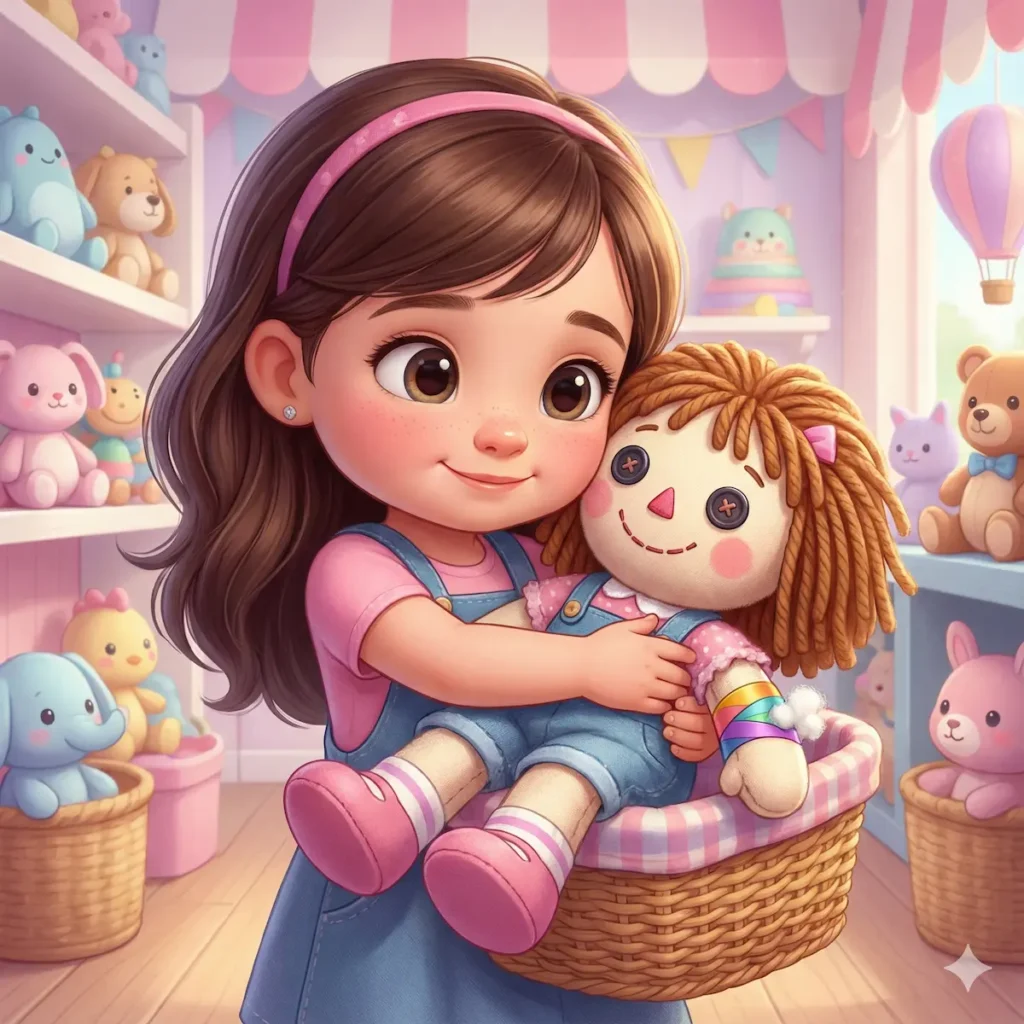
It was a rag doll. Her dress was faded, her yarn hair was messy, and worst of all: she was missing an arm. The foam stuffing was peeking through her torn shoulder. Maria Clara stopped. The doll had a slightly crooked stitched smile, but her button eyes seemed to be asking for a hug.
The Forgotten Treasure
“That one is broken, little girl. Nobody wants it,” said the clerk as he walked by with a broom. “It’s going in the trash tonight.“
The word “trash” hit Maria Clara like a punch. She looked up at the Sparkle Princess on the high shelf—perfect, but cold inside her plastic box. Then she looked at the rag doll, all alone in the bin. Maria Clara remembered when she broke her own arm last year and had to wear a cast. She remembered how sad she felt when she couldn’t play. No one threw her away because of it.
“I want this one,” Maria Clara said, picking up the hurt doll with great care. “Are you sure?” the clerk asked, confused. “I’m sure. She isn’t broken. She just needs a bandage.“
Teach your child the power of love! ✨
Does your child have a big heart? Create a personalized story where they save the day with kindness and empathy.
Create a Kindness Story ➜The Name of Hope
Maria Clara took the doll home. With her mother’s help, she sewed the shoulder, made a new dress out of colorful fabric scraps, and gave her a name: Hope. That night, snuggled up with her new friend, Maria Clara felt that Hope was more special than any plastic princess could ever be.
She realized that things—and people—don’t have to be perfect to be loved. Sometimes, the things that others find “broken” are just waiting for the right person to see their true worth. Hope wasn’t just a doll anymore; she was a reminder that love heals all things.
💡 Moral: Perfection is Not Beauty
Maria Clara’s choice teaches children essential life values:
- Empathy Over Consumerism: Choosing a doll that needs help over a “perfect” one teaches children to value souls and stories over appearances.
- Resilience: The doll’s repair shows that being “hurt” or “broken” is temporary and can be fixed with care.
- Kindness: Taking action to save something forgotten builds a child’s sense of responsibility and compassion.
🧠 Developmental Insight: Why “Fixing” Toys Matters
When children “repair” toys, they are actually practicing nurturing behaviors. This imaginative play helps them process their own feelings of vulnerability. By seeing a broken toy as something worthy of care, children learn to be more accepting of themselves and others when they face challenges or feel “imperfect.”
Values & Empathy FAQ
How can I teach my child to be more empathetic?
Read stories like Maria Clara’s that highlight the feelings of others. Encourage them to help with small tasks, like caring for a pet or donating old toys to those in need.
Why is “Hope” a significant name in this story?
The name symbolizes the belief that no matter how difficult a situation seems, there is always a chance for a new beginning through kindness.
✨ Explore more Bedtime Stories: Online Books for Children
📖 Don't let the magic end! Next, we recommend: Barnaby the Bubble Dragon and the Marshmallow Disaster →